Are Pressure Washers Safe for Cars and Car Paint?
Pressure washers can be used on many cars with healthy paint, but they are not safe for every car or every setting. Moderate pressure, a wide fan nozzle and some distance matter, and chipped, peeling or poorly repainted paint can lift under the spray.
On this page (7 sections)
Whether pressure washers are safe for cars depends on the paint first and the settings second. On healthy factory paint, a moderate setting, a wide fan nozzle and some distance are the usual starting point.
Damage usually starts when the spray is strong, close or narrow, or when it hits paint that is already chipped, peeling or poorly repainted. Follow both the washer maker's manual and the car maker's care guidance before you spray.
Are pressure washers safe for cars? The short answer
For a car with sound factory paint, a pressure washer can be used at a moderate setting, with a wide nozzle and some distance. No single setting fits every car, because the condition of the paint matters as much as the power of the washer.
Paint that is chipped, peeling, loose or poorly repainted can be damaged, even at a setting that is fine on sound paint. That is why checking the finish comes before the first spray.
If you are still asking whether a washer suits a car at all, read Can You Pressure Wash a Car? first.
When a pressure washer is a reasonable choice for cars
Healthy factory paint is the easiest case. A wide fan nozzle is the usual starting point, and you keep the wand moving instead of holding it on one spot.
Run your hand over each panel before you start. Look for chips, bubbles, flaking edges and dull patches, since those spots need a lighter touch or a hand wash.
A car with a few small chips can still be washed, but keep the spray away from those spots and wash around them.
What can go wrong with paint
The spray can lift the edge of a chip, peel a loose flake or wear through a thin patch of clear coat. A weak spot can give way even when the rest of the car handles the spray well.
Repainted panels are a common weak spot. A new coat may not bond to the old finish as well as factory paint does, so those edges need extra care.
Clear coat is the outer layer that protects the color below it. Once it is thin or cracked, spray can get under the edge and spread the damage.
Damage usually shows up as a chip that grows, a lifted edge, a dull patch or bare primer under the paint. Watch these spots after each wash, since small lifts can grow with every pass.
Factors that raise the risk
Four things make a spray more likely to hurt paint. Each one puts more force onto a small area, so the paint has less room for error.
- Narrow nozzles. The 0 degree and 15 degree tips focus the spray into a small spot.
- Close distance. A wand held near the paint hits harder than the same setting from farther back.
- High pressure. More PSI means more force on the surface.
- Damaged paint. Chips, peeling and poor repaints are the weak points.
Two or more of these together raise the risk the most. A narrow tip held close to a chip is the worst case.
Safer settings to start with
Start with a wide nozzle, a moderate setting and some distance. Change them only if the first pass does not clean the panel, and soak the panel with soap before you add force.
A careful routine looks like this:
- Check the paint for chips, bubbles and loose edges before the first spray.
- Try the spray on a low, hidden spot at the distance you plan to use, then dry it and look.
- Pre-rinse the car to loosen grit, and keep the wand moving.
- Apply car wash soap as its label says, and follow the label for how long it sits.
- Rinse from the top down with a wide tip, and do not hold the spray on one spot.
- Dry the panels and look at the paint again, especially along the edges.
A quick photo of any chips before you start helps. After the wash, compare, so you can tell old damage from new.
For the pressure range itself, see Best PSI for Washing a Car.
Pressure washer settings for car paint
Many car washers begin with a 25 or 40 degree tip, since it fans the spray wider than the narrow tips do. Those two angles are the ones to reach for first.
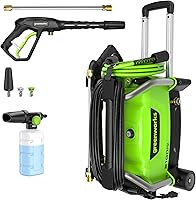
Tool Daily says the tips in this set have a 2.5 orifice and fit a 1/4 inch quick connect wand. Match that to your washer's pressure and flow before you buy a set, and follow your washer's manual.
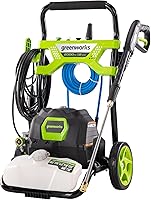
Greenworks sends its 1700 PSI washer with a 25 degree and a 40 degree nozzle, and it calls the 40 degree one the gentle option.
Signs to stop and hand wash
Stop spraying a panel as soon as the paint starts to move. Hand wash that area with car wash soap as its label says, and keep the spray off it until you decide what to do.
Stop and switch to a hand wash if you see:
- A chip that gets bigger or ragged after a pass.
- A flake or edge of paint that lifts or curls.
- A dull or hazy patch that was not there before.
- Bare primer or a different color showing under the paint.
For a lifted or peeling spot, ask a body shop or detailer to look at it before you spray the car again. A spot where you stopped is not a failure, so note where it is, hand wash it and check it again before the next full wash.
For wrapped cars, paint protection film, soft tops or engine bays, follow the maker's care guide or ask a pro.
Washers built for car washing
Some electric washers come with foam cannon connections and wands that suit car washing. The paint rules above still apply to every one of them, so match the model to how you wash, not just its PSI.
Westinghouse names cars among the surfaces its ePX3100v is for, and it says the foam cannon is detachable. The ePX3100v gives both a max figure and a rated figure, and the rated number is the steadier one to compare.
Flow follows the same pattern. Westinghouse gives 1.76 GPM at max, measured at the lowest pressure, and 1.2 GPM as the rated flow.
Chemical Guys says the PM2000 PRO is built for home detailers and car wash fans. It also says its connections take foam cannons without adapters.
The Greenworks 1700 PSI and the PM2000 PRO each come with a 35 ft GFCI power cord, and the maker's manual covers the rest of the power setup.
If you are still comparing models, How to Choose an Electric Pressure Washer for Cars walks through PSI, GPM, hose reach and foam fit in order.
Decide if pressure washers are safe for your car
Whether a washer is the right call comes down to the paint and your habits.
- Use a pressure washer if the paint is healthy, you can keep the pressure moderate and you will use a wide nozzle from a sensible distance.
- Hand wash the car instead if the paint is chipped, peeling or poorly repainted, or if you cannot keep the wand steady.
- If you are unsure about a repair or a worn patch, hand wash that panel and ask a body shop or detailer.
Nozzle and distance are the two settings you control most directly, so start there. For the wash order, read How to Pressure Wash a Car at Home, and the Pressure Washer for Car: The Complete Home Wash Guide covers the setup and gear that go with it.
Frequently asked questions
Can a pressure washer chip car paint?
Yes, it can, mainly when the paint is already chipped or loose, or when a narrow tip is held close to the surface. A sound finish is less likely to chip, but check the paint before you spray and keep the wand moving across each panel.
What nozzle is safest for car paint?
A wide fan tip, usually a 25 or 40 degree nozzle, is the usual starting point, though no nozzle is safe for every car. Avoid the 0 and 15 degree tips on paint because they focus the spray into a small spot, and keep your distance.
Can a pressure washer damage clear coat?
It can, if the clear coat is already thin, cracked, peeling or lifting at an edge. A narrow spray held close can wear through a weak spot, so look for dull or hazy patches before you spray and hand wash those areas instead.
Is it safe to pressure wash a repainted car?
Sometimes, but repainted panels are a weak spot, so use a wide nozzle, keep your distance and check the edges of each repair before you spray. If the repaint looks loose, lifted or peeling, hand wash that area and ask the body shop for care advice.