Can You Pressure Wash a Car?
Yes, you can pressure wash a car if the paint is in good shape and you use a 25 or 40 degree fan nozzle at a sensible distance. Keep the spray off chipped, peeling or loose paint, trim edges, seals, emblems and glass seams.
On this page (8 sections)
Yes, you can pressure wash a car when the paint is in good shape. A wide fan nozzle, moderate pressure and some distance from the surface are the usual starting point, and the paint in front of you decides the rest.
Chipped, peeling or loose paint is where trouble usually starts, so check the car before you pick up the wand. This guide covers when a washer makes sense, what to check first and when a hand wash is the better call.
Yes, you can pressure wash a car (with limits)
A pressure washer can clean a car well when the paint is sound and you use a wide fan tip. Three things decide the answer: the condition of the paint, the nozzle you pick and how close the spray gets.
Washers do their best work on the rinse, because the spray lifts loose dirt off the surface. A foam cannon adds a layer of car wash soap that loosens grime before you rinse.
A hand wash takes longer, but your hands stay close to the paint, so you spot problems as you go. For the PSI numbers behind these limits, read Best PSI for Washing a Car.
What to check on your car first
Walk around the car in good light before you start the washer. Look for chips, peeling clear coat, rust spots and loose flakes, since those spots need to stay out of the spray.
A quick paint check takes a minute:
- Wipe off loose dust, and park in good light.
- Look along each panel from an angle, since chips and dull patches show up best that way.
- Note any bubble, raised edge or flake, and plan to keep the spray away from it.
- Check any panel that has been repainted, because repairs are common weak spots.
Run your hand over the paint, then look closely at any spot that feels rough. Check the lower panels and door edges too, since those areas are easy to miss.
Older cars with faded or thin paint leave less margin for error, so go gentler on them. A quick photo of any chips before you wash lets you compare them afterward.
Can you pressure wash a car with chipped paint?
Chipped paint should stay out of the spray. The force can lift the edge of a chip and make the damage larger.
Wash the rest of the car with the washer, then clean the chipped spot by hand with a soft mitt. Cloudy, flaking or lifting clear coat is another sign to hand wash that area.
For more on paint, see Are Pressure Washers Safe for Car Paint?.
The nozzle, distance and pressure to start with
Start with a 25 or 40 degree fan nozzle, since that is the usual starting point for car paint. Skip the 0 and 15 degree tips on paint, because they focus the spray into a narrow stream.
Many car washers choose a model in the 1,200 to 2,000 PSI class, and a moderate setting in that range is a sensible place to begin. Keep some distance, and move the wand in slow, even passes rather than holding it still.
Washer makers give their own distances in the manual, so follow that number first.
Set up the hose, nozzle and power as the washer maker's manual shows, and check that the tip is seated before you pull the trigger.
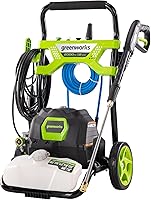
Greenworks calls the 25 degree nozzle general purpose and the 40 degree one gentle cleaning. It describes the turbo nozzle as the heavy-duty tip, and it names fencing, decking and patios among the jobs for this 2100 PSI model, so the washer can split its time between the yard and the car.
Where not to aim the spray
Keep the spray off these areas, even when the rest of the car is in good shape. Wash them by hand with a soft mitt instead.
- Chipped, peeling or loose paint.
- Trim edges, and the gap where trim meets the paint.
- Rubber seals around doors and windows.
- Emblems and badges, especially along their edges.
- Glass seams and window edges.
Spray aimed at an edge can get under it and lift it. Hold the wand back when you pass these spots, and let the soap do the work instead of force.
What to do with trim, seals and emblems
Use a soft mitt and car wash soap on these areas, then rinse them with a gentle stream. Dry them with a clean towel so water does not sit in the seams.
Mistakes that lead to paint damage
A few habits cause most of the trouble on car paint, and each one is easy to avoid.
- Holding the wand close to one spot.
- Using a 0 or 15 degree tip on paint.
- Spraying chipped or loose paint.
- Letting the soap dry on the car before you rinse.
If you spot a problem mid-wash, stop, move back and finish that area by hand.
What gear helps
Keep the kit short: a washer with a wide fan tip, a foam cannon and car wash soap used as the label says. A foam cannon is the soap sprayer that fits onto the wand, and it gives the soap time to work before you rinse.
For the setup itself, see How to Use a Foam Cannon on a Car.
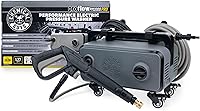
The pump stops when the trigger is not engaged, which Westinghouse says helps the pump and motor last.
If you already own a washer, a separate cannon is an easy add-on. Check the fitting first, because a cannon only works if it matches your wand.
Never mix chemicals in a cannon, and use car wash soap as its label says. If you want a shortlist of washers in the 2000 PSI class, see Best 2000 PSI Electric Pressure Washers for Cars.
When a hand wash is the better call
Choose a hand wash when the paint is already damaged, or when you are not sure how much force the paint can take. A mitt also gives you more control around trim, badges and mirrors.
A hand wash is also the safer call in these cases:
- The car has a recent repaint, and you do not know how well it bonded.
- There are many chips along the hood edge or the bumper.
- You are unsure what pressure your washer really delivers.
You also get a close look at each panel, which makes it easier to catch a new chip early. If you are weighing a washer against a garden hose, see Pressure Washer vs Garden Hose for Washing a Car.
For wrapped cars, paint protection film, soft tops or engine bays, follow the maker's care guide or ask a pro.
Decide if you can pressure wash your car
If the paint is sound and you use a wide fan tip, a washer is a fine choice. If you see chips, loose flakes or worn spots, hand wash those areas and keep the spray off them.
- Pick a washer if the paint looks sound and you can keep the wand moving.
- Pick a hand wash if you see chips, peeling, loose paint or worn spots.
- Pick a hand wash for trim, seals and emblems.
If you are still unsure after checking the paint, hand wash that car this time. For the full steps, follow How to Pressure Wash a Car at Home, and start with the Pressure Washer for Car: The Complete Home Wash Guide for the whole picture.
Frequently asked questions
Is it bad to pressure wash your car?
Not by itself, because many cars come through a pressure wash fine when the paint is sound and the nozzle is a 25 or 40 degree fan tip. Damage usually starts with chipped, peeling or loose paint, so check the paint first and follow both the washer maker's and the car maker's guidance.
Can you pressure wash a car with a regular nozzle?
Yes, as long as it is a wide fan tip, such as a 25 or 40 degree nozzle. Skip any 0 or 15 degree tip on paint, since narrow tips focus the spray into a stream that hits the paint much harder.
Can you use a pressure washer on a new car?
Often yes, but a new car is still a car, so check the paint first and use a 25 or 40 degree nozzle at a sensible distance. The car maker's care guide says how the finish should be washed, and a recent repaint or dealer touch-up is better washed by hand.
Can a pressure washer remove paint?
It can lift paint that is already chipped, peeling or loose, and it can turn a small chip into a bigger one. Sound factory paint is less likely to lift, but check the paint first and keep the spray off any damaged spot.