Electric vs Gas Pressure Washer for Car Detailing
For car detailing at home, an electric pressure washer is the simpler pick, and a gas model only wins on flow for bigger outdoor jobs. Both Westinghouse models here reach 3000 PSI, so the tip and your distance matter more than the engine.
On this page (12 sections)
- Specs side by side: WPX3000e vs WPX3000 Gas
- Gas or electric pressure washer for car detailing: power and flow
- Noise, fumes and where you can run it
- Upkeep, fuel and storage
- Starting up, running and shutting down
- Weight, wheels and moving it
- Soap, foam cannons and nozzles
- Paint, nozzles and distance
- Where each one fits at home
- Which fits how you wash
- Before you buy
- Which to buy: a gas or electric pressure washer for car detailing
For car detailing at home, an electric pressure washer is the simpler pick, and a gas model is the pick when you need more flow. Both Westinghouse models here reach 3000 PSI, so pressure alone does not separate them.
The electric WPX3000e is a 36.8 lb unit with an induction motor, and the gas WPX3000 is a 50.7 lb unit with a 212cc engine. This comparison covers flow, noise, fumes, upkeep and paint.
For the wash itself, start with the Pressure Washer for Car: The Complete Home Wash Guide.

 Best for flow on bigger outdoor jobs away from an outlet
Westinghouse WPX3000 Gas
Specs side by side: WPX3000e vs WPX3000 Gas
Weight and flow point in opposite directions, so the better pick depends on which one limits you. The electric unit is 13.9 lb lighter, and the gas unit moves more water.
| Product | Best for | Max PSI | Max GPM | Weight | Our score |
|---|---|---|---|---|---|
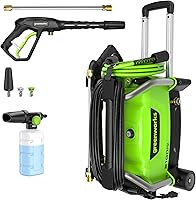
| Westinghouse WPX3000e | car washing without fuel or fumes | 3000 (2600 rated) | 1.76 (1.1 rated) | 36.8 lb | 8.9 |
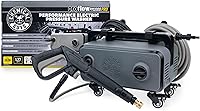
| Westinghouse WPX3000 Gas | flow on bigger outdoor jobs away from an outlet | 3000 | 2.3 | 50.7 lb | 8.3 |
Westinghouse gives the electric unit both max and rated numbers, 2600 rated PSI and 1.1 rated GPM. The gas unit has one set of numbers, so compare max to max.
Gas or electric pressure washer for car detailing: power and flow
Gas moves more water, and electric makes the same top pressure. For one car, soap and a wide fan tip do more of the work than extra flow.
Both units reach 3000 PSI. Westinghouse lists the electric unit at 1.76 max GPM and the gas unit at 2.3 GPM, which is about 31 percent more water.
Max is the top figure a washer can reach, and rated is the lower figure it is built to hold in regular use. Westinghouse gives both for the electric unit and only one set for the gas unit.
Westinghouse says the electric unit's 1.76 GPM is at its lowest pressure, and at 2600 rated PSI it gives 1.1 GPM. The gas unit lists no rated figures, so we cannot say how its flow changes at working pressure.
Flow gap between gas and electric pressure washers for a car
The flow gap matters most on a truck, a long driveway or a big outdoor job, where more water per minute saves time. On a single car, the soap, the tip and the distance matter more.
Both models come with a 25 ft hose, so the hose does not separate them. The electric unit adds a 35 ft GFCI power cord, and the cord sets how far it can sit from power.
What the flow gap means in minutes
At the max flow figures, the gas unit moves 5 gallons in about 2.2 minutes and the electric unit in about 2.8 minutes. At the electric unit's rated 1.1 GPM, 5 gallons takes about 4.5 minutes.
That is simple math on the flow numbers, not a timed run, but it shows the gap is real on a big rinse. If you go electric, How to Choose an Electric Pressure Washer for Cars walks through PSI, GPM, hose reach and warranty.
Noise, fumes and where you can run it
The electric unit is the easier one to run close to the house, because it makes no exhaust and an engine is generally louder than an electric motor. Westinghouse gives no decibel figure for either model, so we cannot rank them by number.
The electric unit runs on a heavy duty 120V AC motor, and the gas unit runs on a 212cc 4-stroke engine. If neighbors or an open window are close to your wash spot, that difference counts.
Fumes and gas washers
The WPX3000 runs on a 212cc engine, so it makes exhaust. Never run it indoors or in a closed garage, and follow the manual for where it may run.
Westinghouse says the gas unit is EPA compliant, and that new units may have a small residual oil or fuel odor. EPA compliance does not make indoor use safe, so keep it outdoors as the manual says.
The electric WPX3000e has no fuel or exhaust to manage. Follow the manual for its 35 ft GFCI cord.
Upkeep, fuel and storage
The electric unit asks less of you between jobs, with no fuel to buy and no engine to service. The gas unit needs fuel and its own engine care.
Westinghouse calls the electric unit's axial 3 piston pump maintenance-free and says it stops when you release the trigger. It describes the gas unit's axial cam pump as maintenance-free too, but the 4-stroke engine is a separate part with its own routine.
The gas tank holds 0.95 gal, and Westinghouse gives no run time per tank, so check the fuel level before a big job. The manual covers the first fill of fuel and oil, and the start routine.
If you want to skip both cords and fuel, Cordless vs Corded Pressure Washer for Washing a Car covers battery models, which make far less pressure.
Storage between uses
Both units store best in a dry spot with the hose coiled loosely and the soap parts flushed as the manual says. For the gas unit, follow the manual for fuel and storage between uses.
The electric unit has no fuel to store, which is one more reason it suits a small garage or a shared space.
Starting up, running and shutting down
The electric unit runs from its power cord and stops its pump when you release the trigger. The gas unit starts with a recoil pull, which is a pull cord, so it takes a firm pull each time you start the engine.
Fuel and oil go into the gas unit before the first start, and the manual covers the steps. The electric unit needs neither.
Westinghouse says both come ready to clean, with tools and a quick start guide in the box. Read the manual before the first use either way, because the steps differ between a motor and an engine.
Weight, wheels and moving it
The electric unit is 13.9 lb lighter on every carry, 36.8 lb against 50.7 lb. Both have never-flat wheels, so rolling the unit across a driveway is easier than carrying it.
The gas unit is narrower at 19.3 in against 25.6 in, but taller at 39.2 in against 36.6 in. Measure the storage spot for height as well as width before you buy.
A 50.7 lb unit is a two-person lift on stairs or into a truck bed. Plan the carry through doors, steps and turns before it arrives.
If 36.8 lb is more than you want to move, Westinghouse ePX3100 vs Sun Joe SPX3000 for Car Washing compares two lighter electric washers.
Soap, foam cannons and nozzles
You do not need gas for a foam cannon, and the electric unit is the easier one to fit. It has a 0.45 gal onboard soap tank, and Westinghouse says it takes accessories with M22 fittings, including foam cannons.
The gas unit has a detergent siphon hose and a soap nozzle. Westinghouse does not name M22 fittings for it, so check the fitting before you buy a cannon for it.
If you add a cannon, our guide to foam cannon fittings explains the quick-connect and thread types to check. Use car wash soap as the label says, and never mix chemicals in the tank, the siphon hose or the cannon.
Which tips come in each kit
The electric kit has 0, 15 and 25 degree tips plus soap and turbo nozzles. The gas kit has 0, 25 and 40 degree tips plus a soap nozzle.
That makes 25 degrees the widest fan in the electric kit, while the gas kit adds a 40 degree tip. Use the widest fan on paint, and keep the 0 and 15 degree tips and the turbo nozzle for hard surfaces.
Paint, nozzles and distance
Both units reach 3000 PSI, so the tip and your distance decide the risk to paint more than the engine does. Start with a wide 25 or 40 degree fan held well back from the panel.
Chipped, peeling, loose or poorly repainted paint can be damaged by either washer. Start on a small hidden area, and read Are Pressure Washers Safe for Car Paint? for the paint side.
A few habits help with either model:
- Hold the wand farther back than feels necessary, and keep the fan moving across each panel.
- Never aim a narrow tip at paint, even for a stubborn spot.
- Rinse from the roof down, and step back if the paint looks thin or flaky.
- Keep the wand pointed away from people and pets.
Where each one fits at home
Both washers are meant for the same outdoor jobs, so the choice is about setup and not the surface. Westinghouse names decks, sidewalks, fences, garage floors, exterior walls, cars and patio furniture for both.
The gas unit's extra flow helps most on large surfaces, such as a long fence line or a big deck. The electric unit's lighter weight and lack of fumes help most when the wash spot is close to the house.
Both carry a 3-year limited warranty with service, labor and parts coverage from Westinghouse, so the warranty does not separate them.
Who each one suits
The electric WPX3000e suits a car owner who wants no fuel, no exhaust and a lighter unit, and who can work within a 35 ft cord.
Skip it if you need the most flow for big jobs, since its 1.76 max GPM trails the gas unit's 2.3 GPM.
The gas WPX3000 suits someone who washes bigger vehicles, works outdoors and wants flow without a power cord.
Skip it if you cannot keep it outdoors or do not want to handle fuel and engine care.
Which fits how you wash
| Your situation | Better fit |
|---|---|
| One or two cars at the house, on a driveway | Electric WPX3000e |
| A washer that gets moved or stored often | Electric WPX3000e, 13.9 lb lighter |
| Washing close to the house or to neighbors | Electric WPX3000e |
| No wish to buy fuel or service an engine | Electric WPX3000e |
| A truck, a long driveway or a big outdoor job | Gas WPX3000, for the extra flow |
| A wash spot beyond a 35 ft cord | Gas WPX3000, outdoors only |
Before you buy
Check these five things for the model you like:
- The flow number that matches your jobs, max or rated.
- The weight, and the carry path to your storage spot.
- The height of the space where the washer will live.
- The fitting for any foam cannon you plan to add.
- The manual for where and how the unit may run, which matters most for the gas model.
Which to buy: a gas or electric pressure washer for car detailing
Pick the Westinghouse WPX3000e if you wash a car or two at home, want no fuel or exhaust and prefer a unit you can move at 36.8 lb.
Pick the Westinghouse WPX3000 Gas if you need 2.3 GPM for bigger outdoor jobs and can run it outdoors, away from a power cord.
If you are undecided, electric is the easier choice for a home car wash. It gives up some flow, and in return you skip fuel, exhaust and 13.9 lb of weight.
For more electric options that also handle the patio and driveway, see Best Electric Pressure Washers for Car and Home Use. For a wider look at washers built for cars, read Best Pressure Washers for Washing Cars at Home.
Frequently asked questions
Is electric or gas better for washing a car?
For most home car washes, electric is the better fit, because the WPX3000e has the same 3000 max PSI as the gas WPX3000, needs no fuel and makes no exhaust. Gas adds flow at 2.3 GPM against 1.76 GPM, which helps more on big outdoor jobs than on a single car.
Can you use a gas pressure washer to wash a car?
Yes, the Westinghouse WPX3000 Gas has 3000 PSI and 2.3 GPM, which is plenty for a car, but it must run outdoors only, never indoors or in a closed garage. Use the 25 or 40 degree tip on paint, keep the 0 degree tip for hard surfaces, and follow the manual for fuel and oil.
Which pressure washer is quieter?
The electric WPX3000e is likely the quieter one, since an AC motor is generally quieter than a 212cc gas engine. Westinghouse gives no decibel figure for either model, so check the manuals before you decide, especially if the washer will run close to neighbors.
Do you need a gas washer for a foam cannon?
No, a foam cannon works with electric washers too, and Westinghouse says the WPX3000e takes accessories with M22 fittings, including foam cannons. The gas WPX3000 has a detergent siphon hose instead, so check its fittings before you buy a cannon for it.