Foam Cannon Not Foaming: Causes and Fixes
A foam cannon that is not foaming usually has too little soap, a dial set too thin, a clog, or a washer that moves too little water. Check those 4 things in order before you buy anything new.
On this page (7 sections)
A foam cannon not foaming almost always comes down to one of 4 causes: too little soap, a dial set too thin, a clog, or a washer that does not move enough water.
Work from the quick checks toward the washer, since the soap, dial and connection take a minute each. The water flow and the cannon come last, because those take more work to change.
Quick checks when your foam cannon is not foaming
Start with the soap, the dial and the connection, since they are quick to check and often the cause. Go down this list in order, and stop when the foam thickens.
- Is there enough soap in the bottle?
- Is the dial set too far toward water?
- Is the mix tube or filter blocked?
- Is the orifice clogged?
- Are the fittings tight and free of leaks?
- Does the washer move enough water?
This table matches what you see to the likely cause.
| What you see | Likely cause | First fix |
|---|---|---|
| Only water comes out | Empty bottle, loose cap or blocked mix tube | Refill, seal the cap, clear the tube |
| Thin, watery foam | Too little soap or the dial set toward water | Add soap, turn the dial toward thicker |
| It foamed last wash, not today | Dried soap in the orifice or nozzle | Rinse and clean with a soft brush |
| Drips or spray at the joint | Loose or mismatched fitting | Push the connection fully on, or check the size |
Is there enough soap in the bottle?
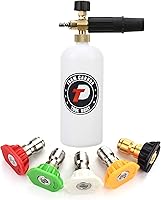
A cannon with too little soap sprays mostly water, so check the level before anything else. Tool Daily says to fill the bottle with soap and warm water, and it says warm water gives thicker foam.
The Tool Daily bottle holds 1 liter, or 0.22 gallon, so check the level before each wash instead of trusting the last fill.
Use a soap made for foam cannons, and follow the label. Never add chemicals to the cannon.
If the foam stays thin with a full bottle, the soap itself may be the problem. Chemical Guys makes Maxi Suds II as a high-foaming soap for foam cannons, so it is worth a look if your current soap gives thin foam.
If you aren't sure how much soap to use, Foam Cannon Dilution Ratio: How Much Soap to Use walks through the measuring. Once the foam is right, How to Use a Foam Cannon on a Car covers the wash itself.
Check the dial and the mix tube
The dial sets how thick the foam comes out, so it is the second place to look. Tool Daily says turning its top knob to the right, toward the minus sign, gives the thickest mixture.
If your foam cannon is not foaming, check the dial first
Turn the dial in small steps toward the thicker setting, and check the spray after each step. A dial set toward water can make the mix thin even when the bottle is full.
If the dial is already at the thickest setting and the foam is still thin, move on to the mix tube and the orifice.
The mix tube carries the soap into the water stream. If it is blocked or sits above the liquid, the cannon may spray water with little or no foam.
Clogs, filters and the orifice
A clog can make a cannon that worked last wash suddenly spray thin or stop foaming. If it has never foamed right, start with the soap and the dial instead.
Dried soap builds up in small parts, especially if the cannon sits with soap left in it between washes. The orifice is the small opening inside the cannon, and grit or dried soap can block it.
Rinse the cannon with clean water after each wash, and empty any leftover soap. If the foam is still thin after rinsing, clean the orifice with a soft brush rather than a metal pin, so you don't scratch it.
If the cannon keeps clogging, rinse it more often. Check any filter or screen in the cannon or the bottle at the same time.
Foam cannon not foaming after a long break
Soap left in a cannon for weeks can dry in the small parts. Empty the bottle and rinse the cannon with clean water before you store it, so the next wash starts with a clear path for the foam.
Water flow: why your pressure washer matters
A foam cannon needs water moving through it, so a washer with low flow can give thin foam even when the soap and dial are right. Flow is measured in GPM, which means gallons per minute.
Westinghouse lists its ePX3100v at 2100 max PSI and 1.76 max GPM at the lowest pressure, plus 1800 rated PSI and 1.2 rated GPM. Max is the peak figure and rated is the lower one, so compare the same pair across washers.
For the exact figures and settings on your model, check the Westinghouse website and the manual that came with your washer.
Foam cannon not foaming because the washer is too weak
If the cannon is clean, the soap is right and the dial is set right, but the spray stays thin, the washer may be the limit. Compare the flow number in your washer's manual with what the cannon maker asks for.
A bigger flow number gives the cannon more water to mix with, but it does not clear a clog. Fix any clog first, then judge the washer.
Greenworks lists 1.2 GPM for its 2100 PSI electric washer, which is a modest flow. If you own a washer in that range, check your cannon's instructions for the flow it needs before you blame the soap.
Fittings and air leaks
A loose or worn connection can leak, and a leak can make the spray weak. Check the joint between the gun or wand and the cannon, and the joint at the hose, after you change anything.
Look at the end of your wand or gun first. A small push-on fitting means a quick connect, and the washer's manual shows the thread or fitting size if you are unsure of the rest.
Push the quick connect fully on and tug it to make sure it holds. If you see drips or spray at the joint, shut off the washer and fix the joint before you run it again.
Mismatched sizes can leak too, so check your gun and wand before you buy anything. Foam Cannon Fittings: Quick Connect, Adapters, Orifice covers the sizes and the adapters that bridge them.
What to do if your foam cannon is still not foaming
Keep the cannon if it is clean and sealed at the joints, and look at the washer's flow next. Replace it if it still leaks at the connection or stays clogged after you rinse it and clean the orifice.
When to replace the cannon
A new cannon makes sense when the old one is damaged or keeps clogging, and nothing in the checks above has fixed it. Check the maker's warranty terms before you buy a replacement.
If you are still deciding whether a cannon suits your wash routine, Is a Foam Cannon Worth It? helps you weigh the choice. If you are picking a new washer and cannon together, start with How to Choose a Foam Cannon for Your Pressure Washer.
For the full picture on washing your car at home, see the Pressure Washer for Car: The Complete Home Wash Guide.
Frequently asked questions
Why is my foam cannon watery?
Watery foam usually means too little soap in the mix or a dial set toward water. Check the bottle level, turn the dial toward thicker in small steps, and if the foam stays thin, check the mix tube and orifice for clogs.
Why does my foam cannon only spray water?
It usually means the cannon is not pulling soap into the stream, often from an empty bottle, a loose cap or a clogged mix tube or orifice. Refill the bottle, check that the cap seals, clear any blockage, and turn the dial back toward the thicker setting.
Can a pressure washer be too weak for a foam cannon?
Yes, a washer with low water flow can give thin foam even when the soap and dial are right. Westinghouse lists its ePX3100v at 1.76 max GPM and 1.2 rated GPM, so compare the same kind of number across washers and check the cannon maker's instructions.
How do you unclog a foam cannon?
Turn off the washer, remove the bottle, and rinse the cannon with clean water until it runs clear. Clear the nozzle tip and the orifice with a soft brush, never a metal pin that can scratch the opening, then reattach the bottle and test the spray.